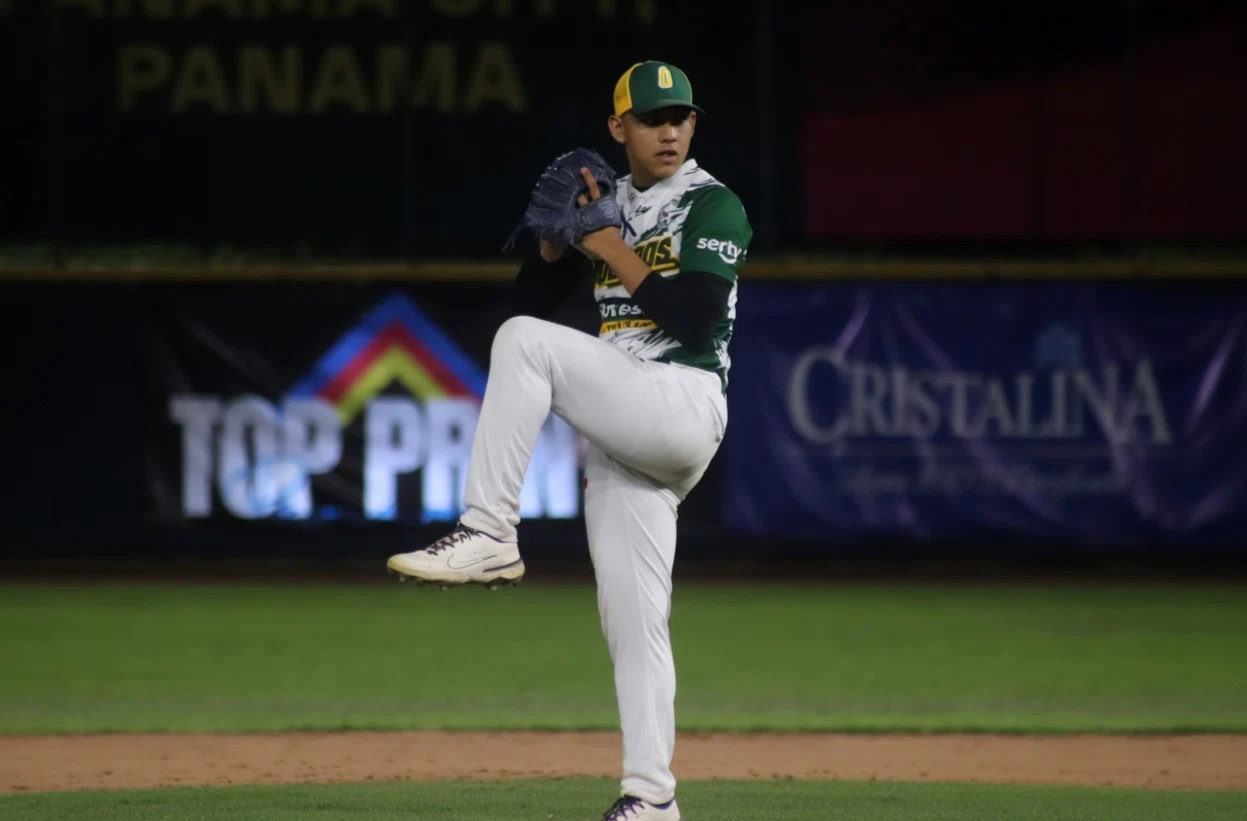
Earning a baseball scholarship in the USA is one of the most realistic goals a Latin American athlete can set, both to play at a high level and to graduate with a US college degree. With more than 1,650 college baseball programs across NCAA, NAIA, and junior colleges, real opportunities exist at every division — if your athletic development, your verified metrics, and your academic preparation line up.
This guide is written for players and families in Panama, the Dominican Republic, Venezuela, Colombia, Mexico, and across Latin America. We'll cover what changed under the 2025-26 NCAA rules, what scouts measure by position, how Division I, Division II, NAIA, and JUCO actually compare, and how to think about choosing between an MLB signing bonus and a college scholarship. Everything is backed with sources and grounded in the recruiting process we walk athletes through every season.
The biggest change: the 11.7 scholarship cap is gone
For decades, baseball scholarships in the USA were governed by a famous rule: an NCAA Division I program could split only 11.7 scholarships across its entire team. That forced coaches to divide aid among 25 or more players and made full baseball scholarships extremely rare.
That has changed. Starting with the 2025-26 season, under the House v. NCAA settlement, team-by-team scholarship caps were removed in Division I. Schools can now award athletic aid to every player on a 34-man roster, in any amount, up to the cost of attendance.
What that means for a Latin American athlete
- More scholarships on the table. The cap jumped from 11.7 to as many as 34, so a fully funded D1 program can give meaningful aid to more players than ever before.
- Smaller rosters. Previously, D1 teams carried up to 40 players. Now the limit is 34, so each roster spot is more valuable and harder to earn.
- Academics matter more. Coaches now stack athletic aid with academic and need-based money to stretch budgets. A player with a strong GPA and TOEFL gets farther on less athletic money.
One caveat: only schools that opted into the settlement (Power 5 plus others that chose to join) follow the new rules. Division II, Division III, and many non-Power 5 schools still operate under prior limits.
Scholarship counts by division
Before emailing coaches, understand the ecosystem. Each division operates differently, and many Latin American athletes end up at a different division than they originally pictured — often with great outcomes.
| Division | Number of programs | Historical scholarship cap | Typical roster |
|---|---|---|---|
| NCAA Division I | ~298 | 11.7 (removed in 2025-26, now up to 34) | 34 players |
| NCAA Division II | ~259 | 9 | ~39 players |
| NCAA Division III | ~374 | No athletic scholarships | ~34 players |
| NAIA | ~212 | 12 | ~38 players |
| JUCO Division I | ~511 | 24 (full scholarships possible) | ~30 players |
Figures published by Bold.org and NCSA.
A few things most families overlook:
- Division III offers no athletic scholarships, but many D3 schools are academically strong and put together financial aid and merit packages that can rival a partial athletic scholarship.
- Ivy League and Patriot League programs don't give athletic scholarships either, regardless of how strong the baseball team is. If your target is Harvard or Princeton, the route is need-based financial aid.
- JUCO Division I is often the smartest entry route for LATAM athletes, especially for players still working on English or who need extra physical development time.
The JUCO route: the option most LATAM families undervalue
When a Panamanian or Dominican athlete hears "US college scholarship," they automatically think Division I. The reality is that for many Latin American players, the smartest route starts at a junior college (JUCO).
Why JUCO works for LATAM athletes
- More flexible academic and English requirements. A JUCO will accept players whose GPA or TOEFL isn't quite at the D1 cutoff yet.
- Time to adapt. Two years to improve English, add weight, adjust to American culture, and the pace of college baseball.
- Real full scholarships. JUCO Division I programs can offer aid that covers tuition, books, housing, and meals.
- A proven pipeline to D1 and D2. Programs like State College of Florida, San Jacinto College, and Chipola College have moved dozens of players into top D1 programs.
If your son has the talent but the GPA or English isn't there yet for Division I, JUCO isn't a backup — it's the smart Plan A.
The verified metrics coaches actually want to see
A US college coach isn't going to take your word — or your club coach's word — for what you can do. They want numbers verified by a neutral third party. Here are the real division-by-position benchmarks, according to NCSA Sports' recruiting guidelines.
Position players (D1)
| Metric | Catcher | Infield | Outfield |
|---|---|---|---|
| 60-yard dash | 7.0 or below | 6.5–6.8 | Below 6.7 |
| Exit velocity | 90+ mph | 90+ mph | 93+ mph |
| Arm velocity | Pop time 1.95s | 85–95 mph | 87–95 mph |
| OBP / SLG | .400 / .500 | .500 / .600 | .500 / .600 |
Pitchers (D1)
- Fastball: 88+ mph minimum, ideally 90+ mph to open doors at Power 5 programs.
- Secondary pitch: Curve, slider, or changeup with real shape and movement. Coaches care about the break, not just the gun reading.
- Command and mechanics: More important than pure velocity. A pitcher sitting 87 with elite command will get more offers than a 92 with poor control.
How to get verified metrics from LATAM
- Official showcases: Perfect Game, Prep Baseball Report (PBR), or any USA-based event with TrackMan, Rapsodo, or HitTrax measurement.
- International combines: Some coaches accept numbers from combines held in the Dominican Republic, Panama, or Colombia if they're recorded with verified technology.
- Planned trip to the US: Many LATAM athletes travel once a year to a major showcase (PG National, WWBA, PBR Future Games) specifically to test in front of college coaches.
Never send numbers you can't back up. A coach who spots an inflated metric deletes the email in seconds.
Academic requirements: not optional
Talent opens the conversation. Grades close it. To be eligible at NCAA Division I, you need:
- A minimum 2.3 GPA on a 4.0 scale, calculated on 16 core courses (4 of English, 3 of math, 2 of natural science, etc.).
- 10 of those courses completed before senior year, per the NCAA Eligibility Center.
- Registration with the NCAA Eligibility Center starting at age 15-16.
- TOEFL, Duolingo English Test, or IELTS at the score each school accepts (every program sets its own minimum).
For Division II, the GPA minimum drops to 2.2. For JUCO, requirements are set by each school and tend to be more flexible. To understand the differences between leagues better, read our breakdown of NCAA vs NAIA.
MLB or college? A real decision for LATAM players
For many Dominican, Venezuelan, and Panamanian athletes, a critical moment arrives: an MLB academy offers a signing bonus around the same time college interest picks up. It's a personal decision, but there are concrete criteria that help.
When signing pro makes sense
- The bonus is six figures or more.
- You're physically ready (18+, mature body, already throwing 92+ mph or showing pro-level metrics).
- Your family has a clear financial plan for the minor league years.
- You play a scarce position (lefty pitcher, strong-armed catcher, shortstop).
When the college scholarship makes more sense
- The bonus is modest or doesn't include a full release.
- You need more physical or skill development.
- You want a college degree as a backup if pro baseball doesn't pan out.
- You'd benefit from another shot at the draft in three years, more mature and with more exposure.
Fewer than 10% of amateur signees ever reach the majors. A college scholarship gives you a second draft attempt with a degree in hand if it doesn't work.
A realistic timeline for a LATAM player
Here's what a well-planned recruiting process looks like, assuming the athlete finishes high school at 17-18:
- Ages 13-14: Build the physical base, get initial metrics, club video, learn the divisions.
- Age 15: Register with the NCAA Eligibility Center. First international showcase. Preliminary TOEFL.
- Age 16: Verified metrics. First recruiting video. List of 25-30 target schools. First emails to coaches.
- Age 17: Major showcases (PG National, PBR Future Games). Campus visits if possible. Final TOEFL/SAT. Document apostille.
- Age 18: Sign the National Letter of Intent (NLI). F-1 visa. Prepare for first fall ball.
If your son is 16 and hasn't started, you're not late. If he's 17 and just starting, the pace is tight but possible — especially with JUCO as a strong alternative.
Mistakes that cost baseball scholarships
- Long, unedited video. A coach gives you 30 seconds. If your best plays aren't at the start, the rest never gets watched.
- Generic email blasts to 80 schools. Twenty personalized emails with the coach's name, real program details, and verified metrics beat eighty mass emails every time.
- Late registration with the NCAA Eligibility Center. Without confirmed eligibility, no scholarship — no matter the talent.
- Dismissing JUCO. Some of the best MLB prospects came up through junior colleges. It's not a lower step.
- Inflating metrics. Coaches cross-check numbers against video and regional scouts. One fake stat burns your name across the network.
For a deeper look at common mistakes, we wrote a full guide to the 7 most common mistakes when applying for sports scholarships — most of them apply directly to baseball.
How New Vision Sports helps
At New Vision Sports we work specifically with Latin American athletes. We know how Panamanian or Venezuelan grades translate to the US system, which showcases make sense for an international player, which coaches are actively open to recruiting outside the US, and how to present your profile so a D1, D2, or JUCO program takes you seriously.
We support every stage:
- Honest evaluation of your level and the divisions where you can realistically compete
- Recruiting video production from your most verifiable footage
- Showcase strategy (which ones, which ones not, when)
- Direct outreach to US coaches
- NCAA eligibility prep and legal documentation
- Continuous support through your first day of class
Take the next step
If you want to know where you stand today and which US schools are realistic for you, book a free evaluation with our team or start your process here. In baseball, timing is everything. Start early, do it right, and the scholarship follows.