You put in years of training. You have the level. But there's one thing standing between you and a U.S. college sports scholarship: the email you haven't sent yet. Learning how to email a college coach correctly is one of the most practical and high-impact skills in the entire recruiting process — and most international athletes either skip it entirely or do it wrong.
This guide breaks down exactly what to write, how to structure your message, and what coaches actually want to see when they open your email. You'll also find a real template you can adapt and send today.
Why Emailing College Coaches Is Your Most Powerful Recruiting Tool
Coaches at NCAA and NAIA programs don't have unlimited time to scout every country. Unless you're a top-ranked prospect with national exposure, you won't end up on a roster by waiting to be found. You have to reach out first.
The good news: you can email a college coach at any time. The NCAA's contact rules only restrict when coaches can initiate contact with you — not the other way around. According to NCAA recruiting guidelines, Division I coaches can begin responding to recruits starting June 15 after sophomore year (or September 1 of junior year, depending on the sport), but your email can arrive in their inbox months before that — and they will read it.
That's an advantage most athletes don't use. The ones who do are the ones who build a relationship with a program before the official recruiting window even opens.
What to Prepare Before You Email a College Coach
Sending an email without preparation is worse than not sending one at all. A weak first impression is hard to recover from. Before you write a single word, have these ready:
- A highlight video (5–8 minutes): Your best plays, clearly filmed, edited, and uploaded to YouTube or a similar platform. This is what coaches click first.
- Your academic profile: GPA, graduation year, and English test scores (TOEFL, Duolingo, or IELTS). Coaches need to know you're eligible before they invest time in you.
- A list of target programs: Research each school before you contact them. Know their division level, their playing style, and their coaching staff. Sending a generic email to 100 programs signals zero genuine interest.
- Your athletic data: Height, weight, position, current club or team, and any notable achievements or competition level.
If you still need to nail down your eligibility requirements or understand the difference between NCAA and NAIA programs, do that research first — it will make your emails sharper and your list more targeted.
How to Write an Email to a College Coach: Step by Step
The Subject Line
Coaches receive dozens of emails every week. The subject line determines whether yours gets opened or ignored. Keep it under 75 characters and include your key information in a structured format:
Formula: [Grad Year] [Position] | [Name] | [Key stat or achievement]
Examples:
2027 Midfielder | Carlos Rivera | 3.8 GPA | Venezuela2026 Point Guard | Sofia Mejía | 1.78m | Colombia | Video Attached
Include "Video Attached" in the subject line when you have a highlight reel ready. Coaches are significantly more likely to open emails with video content.
The Email Body
Keep it under 250 words. Coaches are busy — a long email signals you don't respect their time. Structure it in three parts:
Part 1 — Introduction (2–3 sentences): State who you are, where you're from, and why you're reaching out to this specific program. Mention one specific detail about the school or program that caught your attention. Generic openers get deleted.
Part 2 — Your Profile (3–5 bullet points or short paragraph): Your athletic and academic highlights. Include your graduation year, position, current team, competition level, GPA, and English level. Link to your highlight video.
Part 3 — Next Steps (1–2 sentences): Express clear interest. Tell them you'd welcome the chance to connect or provide additional materials. Keep it professional and direct — not desperate.
The Sign-Off
Use your full name. Include your phone number (with country code), email, and your highlight video link one more time. Some coaches forward emails to assistants — make sure the contact info is in the body, not just the header.
Email Template: How to Introduce Yourself to a College Coach
Here is a proven template you can adapt. Replace everything in brackets with your own information:
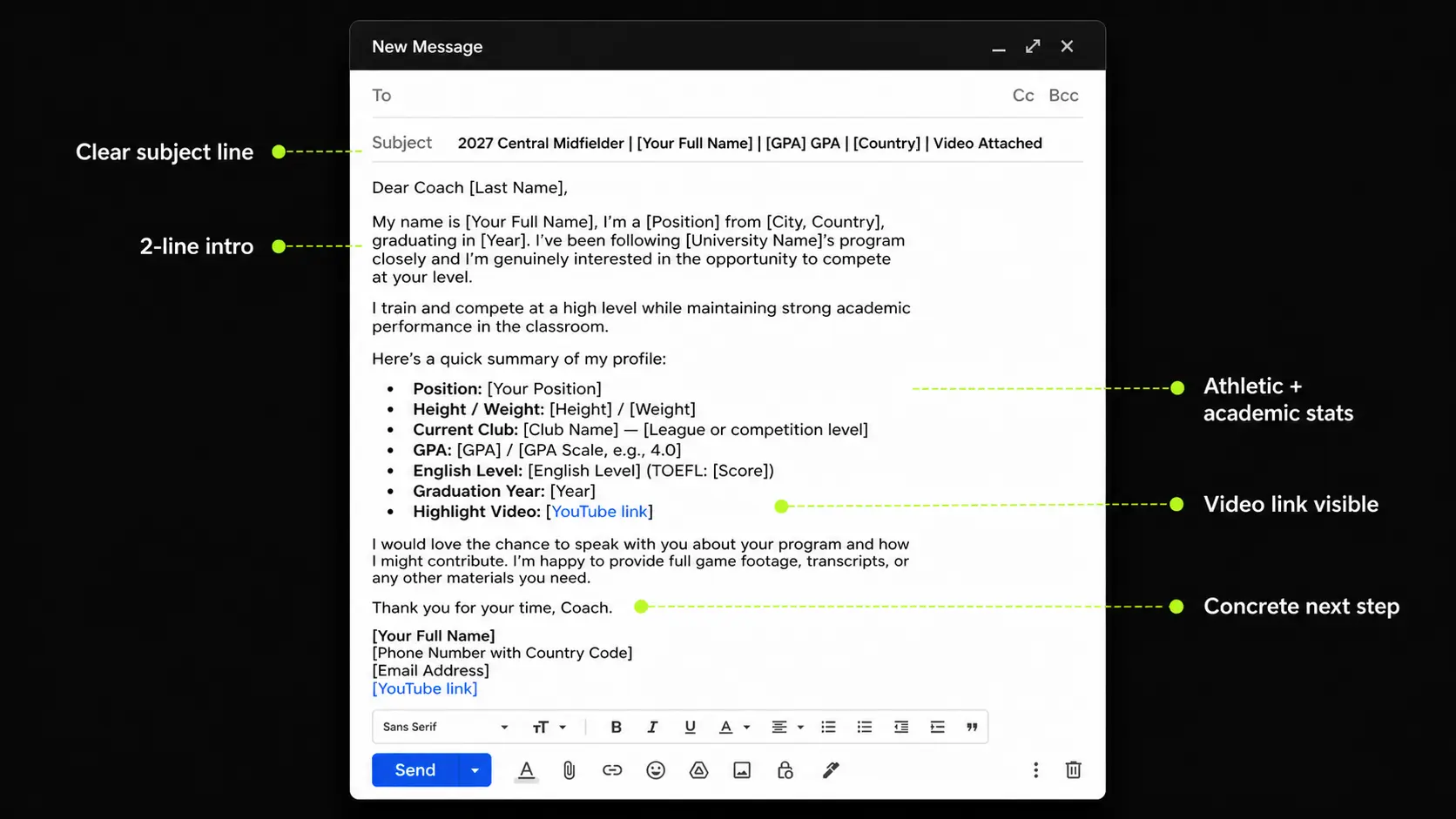
Adapt the tone and details — but don't change the structure. It works because it gives coaches exactly what they need in the least amount of time.
Common Mistakes When Emailing a College Coach
Knowing the most common errors in the scholarship application process can save you from starting on the wrong foot. When it comes to emails specifically, these are the ones that kill your chances:
- Sending a generic email: "Dear Coach, I am a great player and would love to join your program." Coaches can spot a mass email in seconds.
- No highlight video: If there's no video, there's nothing for the coach to evaluate. It's that simple.
- Ignoring academics: Mentioning nothing about your GPA or English level signals you haven't looked into eligibility requirements.
- Wrong coach or wrong division: Emailing a Division I program when you're at a Division III level — with no self-awareness of that — damages your credibility.
- No follow-up: If you don't hear back in 2–3 weeks, send a short, polite follow-up. One follow-up is professional. Three in a week is not.
When and How Often to Follow Up
Send your first email. Wait two to three weeks. If no response, send a brief follow-up that adds value — an updated video, a tournament result, or a new academic achievement. Keep it short. If there's still no response after a second follow-up, move on. That program may not be recruiting your position, your division level, or your graduation year. It's not always personal.
One useful tactic: fill out the program's official recruiting questionnaire on their website before emailing. It puts your name in their system and gives your email a better chance of being recognized.
How New Vision Sports Helps You Get in Front of the Right Coaches
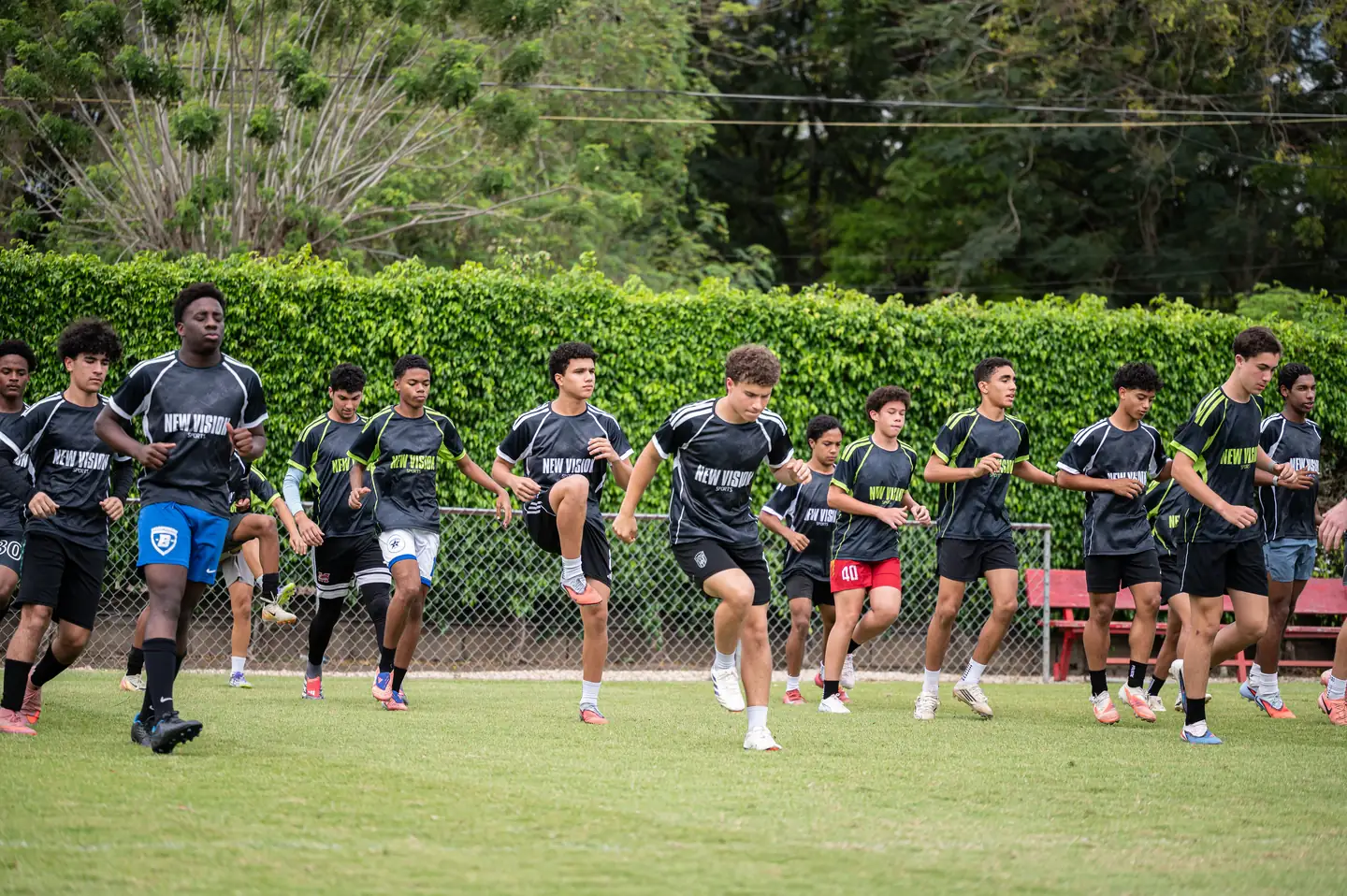
Writing the right email is only one piece of a much larger process. At New Vision Sports, we work with athletes across Latin America, Central America, and Spain to build a complete recruiting package that gets results:
- Profile evaluation (athletic and academic)
- Professional highlight video production
- Eligibility documentation support
- Personalized outreach to college coaches across the USA
- Follow-up strategy and communication management
- Ongoing guidance until you secure your spot
Our athletes don't just send emails — they send the right emails, to the right coaches, at the right time, backed by a professional profile that coaches take seriously.
Ready to start? Schedule a free evaluation with our team and let's build your recruiting strategy together.
Start the Conversation — Don't Wait for Coaches to Find You
The athletes who earn sports scholarships in the USA are not always the most talented ones. They're the most proactive. Knowing how to email a college coach — and doing it consistently, with a professional profile behind you — is what turns potential into an actual offer.
Use the template in this guide, prepare your materials, and start building relationships with programs today. And if you want expert support at every step of that process, our team at New Vision Sports is ready to help.